Trade Show Booth Traffic Flow for Better Engagement
There is a moment that happens thousands of times on every trade show floor, and most brands never even realize it is occurring. An attendee approaches a booth, slows down for just a second, and then keeps walking. No conversation. No connection. No lead. From the outside it might look like disinterest, but more often than not, the real culprit is something far more fixable — poor booth traffic flow.
The way people move through a space is one of the most powerful and most overlooked factors in trade show performance. Brands spend enormous amounts of time and energy perfecting their messaging, their graphics, and their product displays, yet give little thought to how attendees will actually navigate their booth once they arrive. The result is often a beautifully designed space that fails to convert foot traffic into meaningful engagement simply because the layout is working against the experience rather than for it.
Understanding and designing for booth traffic flow is not complicated, but it does require intentionality. When done right, it transforms your exhibit from a passive display into an active, guided experience that draws people in, keeps them engaged, and gives your team every opportunity to make a lasting impression.
Why Booth Traffic Flow Matters More Than You Think
Most exhibitors measure trade show success by the number of conversations their team has and the quality of leads they walk away with. What they often fail to consider is how many potential conversations never happened at all — not because attendees were not interested, but because the booth layout made engagement feel uninviting or unclear.
Booth traffic flow is the invisible architecture of your exhibit. It determines where people go when they enter your space, how long they stay in each area, which parts of your booth receive the most attention, and where conversations naturally begin. A layout with strong, intentional flow keeps attendees moving deeper into the experience. A layout with poor flow sends them back to the aisle within seconds.
The stakes are higher than many brands realize. On a busy trade show floor, attendees are making split-second decisions about where to spend their time. The booths that win that competition are not always the biggest or the most expensive. They are the ones that feel immediately welcoming, easy to navigate, and worth exploring further.
Understanding How Attendees Move
Before you can design for better booth traffic flow, it helps to understand how people naturally move in trade show environments. Human movement patterns are surprisingly consistent, and designing with them in mind rather than against them makes an enormous difference in how your booth performs.
People naturally gravitate toward open, well-lit spaces and tend to avoid areas that feel cramped, cluttered, or blocked. They follow visual cues — bright signage, interesting displays, movement, and light all act as natural magnets that draw the eye and redirect foot traffic. They also tend to move to the right when entering a new space, a well-documented behavioral tendency that smart booth designers account for when positioning key displays and engagement zones.
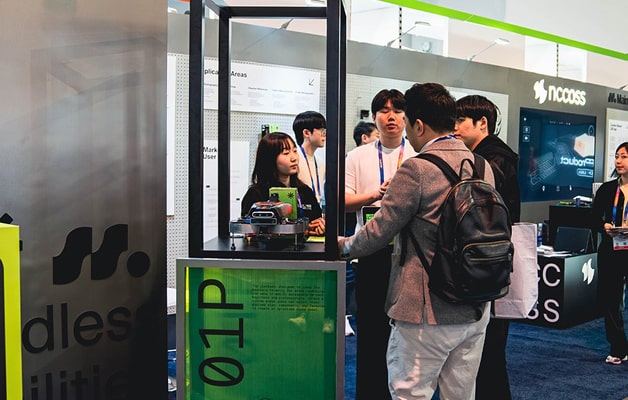
One of the most common traffic flow mistakes brands make is placing large furniture, counters, or product displays directly at the entrance of their booth. While the intention is usually to create a focal point, the effect is often the opposite — it creates a barrier that signals to attendees that the space is closed off or requires effort to enter. The result is a booth that looks busy from the aisle but struggles to pull people in.
Key Strategies for Optimizing Booth Traffic Flow
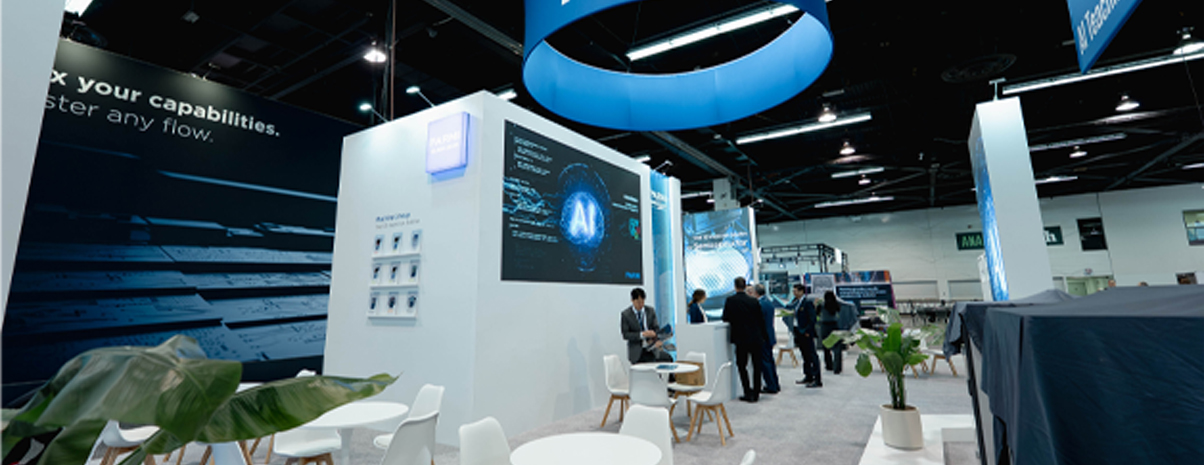
Improving booth traffic flow starts with opening up your entry points. Removing barriers, counters, and narrow corridors from the front of the space signals to attendees that they are welcome to step in freely, without pressure or obligation. An open, inviting entry is the first step toward deeper engagement, and it is often the single most impactful change a brand can make to how their booth performs on the floor.
From there, the goal is to create a natural journey through the space. Rather than scattering displays and engagement touchpoints randomly throughout the booth, design with a clear, intentional path in mind. Think about where you want attendees to go first, second, and third, and arrange your elements to guide them naturally through that sequence. Each stop along the journey should serve a purpose — introducing the brand, demonstrating a product, or creating an opportunity for a meaningful one-on-one conversation.
Zoning is another powerful strategy worth building into your layout. Dividing your booth into distinct functional areas — a demonstration zone, a meeting space, an interactive display area — allows you to serve multiple audience needs simultaneously without the space feeling chaotic or unfocused. When these zones are laid out with flow in mind, they work together to move attendees through a complete brand experience rather than a single static moment.
One of the most effective techniques that often gets overlooked is placing your most engaging content deeper inside the booth rather than right at the front. Live demonstrations, interactive displays, and key products positioned further into the space draw attendees in further, increase dwell time, and create more opportunities for your team to initiate meaningful conversations before visitors turn back toward the aisle.
How Design Elements Support Better Flow
Traffic flow is not just about furniture placement and spatial planning. The visual and structural elements of your booth play an equally important role in guiding attendees through your space naturally and intuitively.
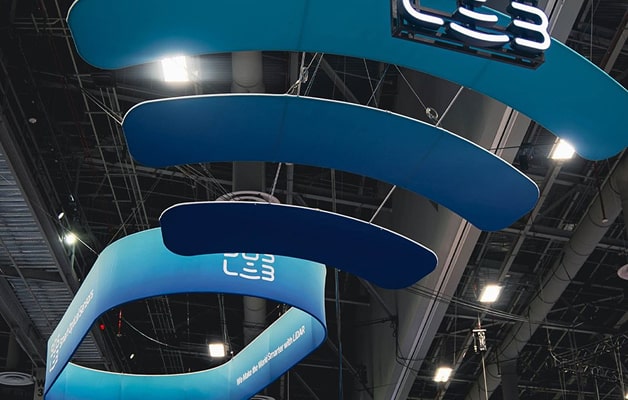
Signage and graphics are powerful directional tools when used with intention. Bold overhead signage draws the eye from across the hall and anchors the overall space. Directional graphics and visual cues within the booth can subtly guide attendees toward key areas without feeling forced. Lighting works in a similar way — strategic accent lighting on key displays and demonstration areas naturally draws the eye and signals to attendees where the most interesting content lives. Well-lit pathways create an unconscious sense of direction, while warmer, more intimate lighting in meeting areas signals that those zones are designed for focused, relaxed conversations.
The structural design of the booth itself also contributes to flow in ways that are felt before they are consciously understood. Curved or angled walls, open sightlines, and varying ceiling heights all create a sense of movement and discovery that encourages attendees to keep exploring rather than stopping at the first thing they see. These details are what separate a booth that simply looks good from one that actively performs.
Build a Booth That Works as Hard as You Do
Optimizing booth traffic flow is most effective when it is built into the design process from the very beginning rather than treated as an afterthought. That requires a partner who understands not just how to build a visually compelling exhibit, but how to design a space that works strategically on a human level.
Beaver XP approaches every project with this philosophy at its core. As a full-service design and fabrication house based in La Mirada, California, their team integrates strategic planning into every stage of the exhibit creation process — from the initial concept through fabrication, installation, and on-site execution. The result is a booth that does not just look great, but actively works to guide attendees, encourage engagement, and give brands every possible opportunity to make a meaningful connection on the show floor.
Great booth traffic flow is one of those things attendees never consciously notice — but always feel. When a space is designed with flow in mind, everything feels natural and welcoming. Conversations happen organically. People stay longer. Engagement goes deeper. And at the end of the show, the leads are there to prove it.
If you are ready to build a trade show exhibit designed from the ground up to drive real engagement, reach out to Beaver XP today. Their team will work with you to create a space that not only looks impressive but performs — turning foot traffic into conversations and conversations into results.