Overhead Hanging Signs and Rigging: Commanding Attention From Across the Hall
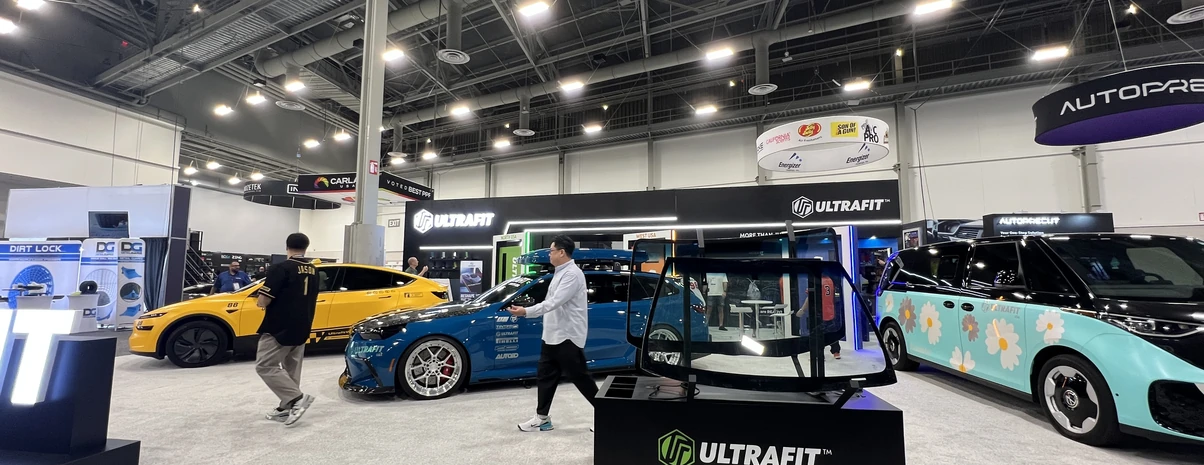
On a packed trade show floor, the fiercest competition is not happening at eye level. It is happening in the air above the booths. Long before an attendee is close enough to read your tagline or see your products, they have already scanned the horizon of the hall and decided, often unconsciously, which directions are worth walking. Trade show hanging signs are how brands win that first distant glance, claiming attention from clear across a crowded exhibition hall.
An overhead structure does something no ground-level element can. It rises above the visual noise, anchors your space within a sea of similar booths, and acts as a beacon that helps people find you in a venue that can feel overwhelming. For mid-size and large exhibits especially, a well-designed hanging sign is one of the highest-impact investments an exhibitor can make.
Why Overhead Signage Commands Attention
The human eye is naturally drawn to height, and in a convention hall packed with booths of similar footprint, the vertical space above the aisles is where a brand can truly differentiate itself. A hanging sign elevates your logo to a position where it is visible from hundreds of feet away, guiding foot traffic toward you before competitors at floor level even register in an attendee’s mind.
There is also a credibility signal built into overhead signage. Hanging structures require planning, budget, and venue coordination, so their very presence suggests an established, serious exhibitor. Attendees rarely think this through consciously, but a commanding overhead sign quietly communicates that a brand has invested in being there, which makes the booth beneath it feel like a destination worth crossing the hall to visit.
Consider how attendees actually navigate a large hall. They rarely study the floor plan in detail; instead they orient themselves by the biggest, brightest landmarks they can see and walk toward whatever catches their eye. An overhead sign effectively turns your booth into one of those landmarks, giving lost or undecided visitors a clear reason, and a clear direction, to head your way rather than toward a competitor.
Common Shapes and Styles of Hanging Signs
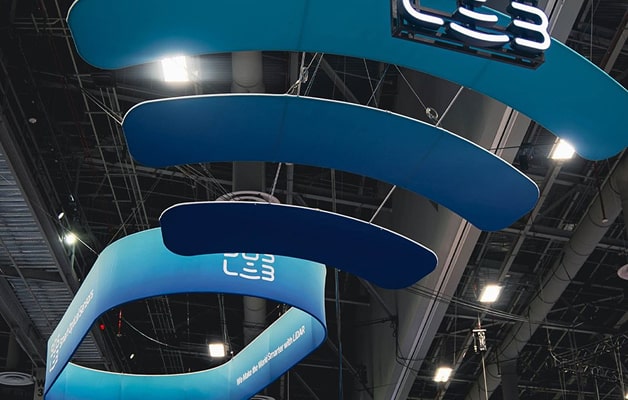
Hanging signs come in a range of forms, each suited to different goals and booth layouts. Circular and ring-shaped signs are popular because they read clearly from every direction, ensuring your brand stays legible no matter which aisle an attendee approaches from. Square and rectangular structures offer large, flat faces that are ideal for bold logos and concise messaging that can be absorbed in a single glance.
More ambitious exhibitors turn to custom three-dimensional shapes, multi-sided forms, or sculptural structures that double as art pieces. Some incorporate rotating elements, layered depth, or silhouettes that echo a product or brand symbol. The right choice depends on your identity, your budget, and how you want to be perceived both from a distance and up close once an attendee is standing beneath it.
Size and proportion deserve as much thought as shape. A sign that is too small disappears into the rafters, while one that is too large can overwhelm the booth beneath it or run afoul of venue height limits. The most effective overhead structures are scaled to be readable from across the hall while still feeling balanced and intentional when an attendee is standing directly below, looking up.
Lighting, Motion, and Digital Integration
A hanging sign does not have to be static. Integrated lighting transforms an overhead structure into a glowing landmark that stands out even in a dimly lit hall, and backlit or edge-lit signage keeps your brand legible from morning setup through evening receptions. Light is one of the most effective ways to make an overhead element genuinely impossible to ignore.
Motion and technology raise the impact even further. Slowly rotating signs catch the eye through subtle movement, while LED ribbons and suspended digital screens let brands display dynamic content, animations, or live social feeds high above the floor. These elements turn a sign into a moving, changing focal point, though they add cost and technical complexity that must be planned for carefully and well in advance.
Color plays a major role here too. High-contrast combinations and clean, simple typography read far better at a distance than intricate detail, which tends to blur into illegibility from across a hall. When designing an overhead sign, it helps to ask one simple question: can someone identify the brand in a fraction of a second from two hundred feet away? If not, the design needs to be bolder.
The Rigging and Engineering Behind the Scenes
What makes an overhead sign feel effortless is a great deal of unseen engineering. Hanging structures must be designed to precise weight limits, balanced correctly, and built with certified rigging points so they can be safely suspended from the venue ceiling. This is not an area for improvisation. It is a matter of genuine safety and of compliance with strict, non-negotiable venue regulations.
Every convention center has its own rules governing hanging signs, including maximum heights, weight restrictions, approved rigging vendors, and required engineering documentation. Drawings often must be submitted and approved weeks before the show opens. Partnering with a fabrication team that understands these requirements is essential, because a beautifully designed sign is worthless if it cannot be approved and safely installed on site.
Budgeting accurately for a hanging sign means accounting for more than fabrication alone. Rigging labor, lift equipment, electrical hookups for lighting, and the venue’s own rigging fees add up quickly and vary dramatically from one convention center to another. Understanding these costs early prevents unwelcome surprises and ensures the sign you design is one you can actually afford to hang when show week finally arrives.
This is exactly the kind of behind-the-scenes complexity Beaver XP manages as a full-service design and fabrication house, handling the engineering, documentation, and on-site rigging coordination so the only thing the client experiences is a flawless structure floating effortlessly above their booth.
Planning Your Hanging Sign From the Start
The biggest mistake exhibitors make with overhead signage is treating it as an add-on late in the process. Hanging signs need to be considered from the earliest stages of booth design, because their size, shape, and placement should work in harmony with the structures and traffic flow below. A sign designed in isolation can easily clash with the very booth it is meant to crown.
Logistics matter just as much as design. Hanging signs require lead time for engineering approval, fabrication, shipping, and the labor to install them before doors open. Build these timelines and costs into your planning early, and always confirm the rigging requirements for your specific venue, since assumptions carried over from one show rarely apply cleanly to the next one.
It also helps to think about reuse from the very outset. A modular overhead structure designed to be reconfigured or rebranded can serve across multiple shows and booth sizes, spreading its cost over years rather than a single event. Building that flexibility in from the start is one of the smartest ways to make a significant signage investment pay for itself again and again.
Rise Above the Show Floor
In a hall where every brand is fighting for attention, the space above the booths is some of the most valuable real estate available, and a striking hanging sign is how you claim it. Done right, overhead signage turns your exhibit into a landmark, pulling attendees toward you from across the venue and setting the tone before they ever arrive at your front edge.
Beaver XP designs, engineers, and installs custom overhead structures that make brands impossible to miss. Get to know our full-service team, explore the services we deliver from strategic planning through fabrication and on-site operation, and see how our fabrication and installation team brings ambitious structures to life. When you are ready to command the airspace at your next show, start your project with us and let’s make sure the whole hall sees you coming.